
Repairing a tank
A heater that runs out of hot water early, trips its breaker or will not light can need a new element, thermostat, thermocouple or gas valve rather than a whole new tank.
When the shower turns cold halfway through, the tank rumbles or there is water on the floor around the heater, call us. Tank and tankless water heaters are repaired where a part has failed and replaced when the tank itself is done.
Below you will find the repair and replacement options, how permits apply to a new heater in Garland, and how to size one.
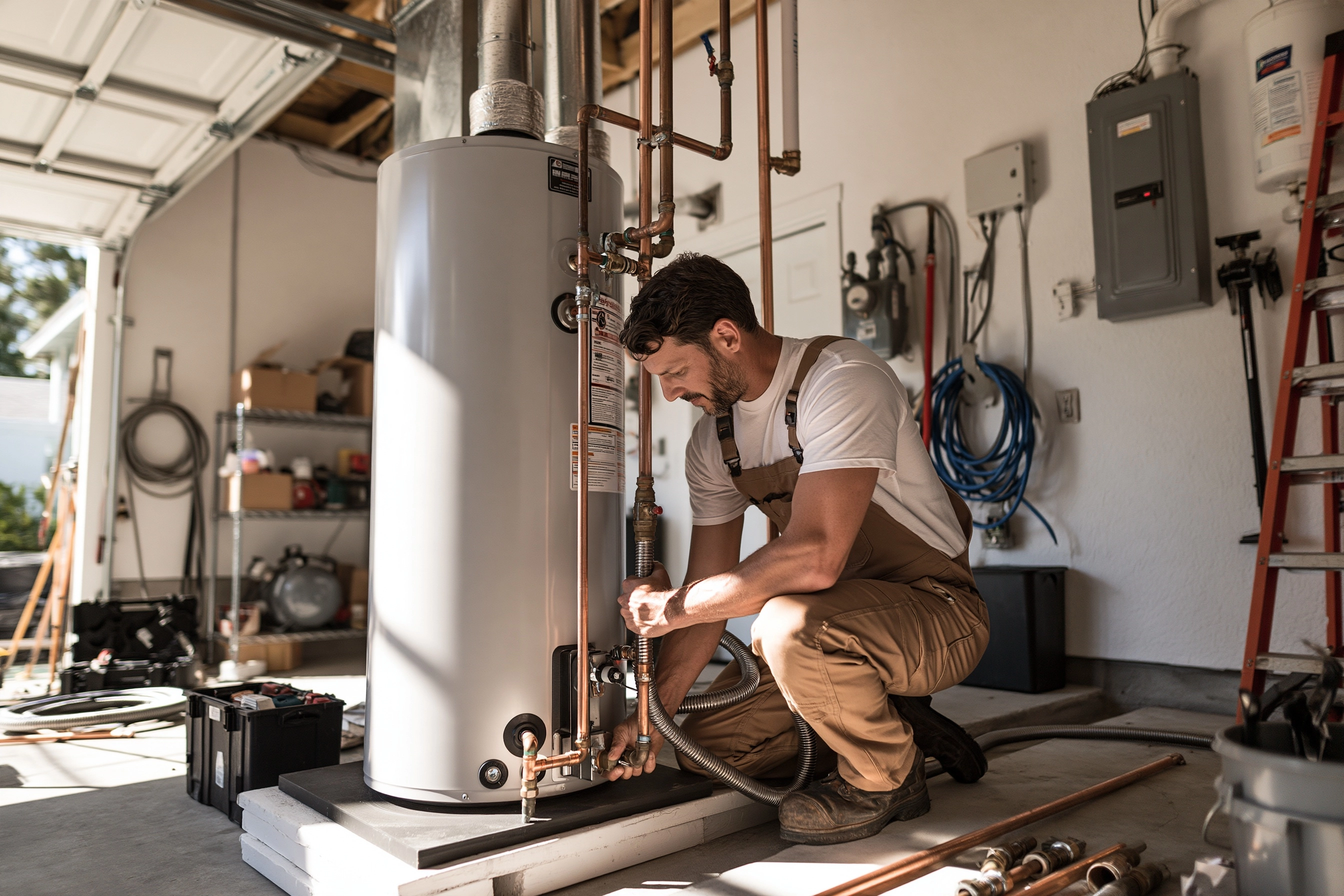
A heater that runs out of hot water early, trips its breaker or will not light can need a new element, thermostat, thermocouple or gas valve rather than a whole new tank.
Once the tank shell itself is leaking at a seam or through the bottom, no repair will hold. Out comes the old heater, and the new one is connected with new fittings and its own relief valve.
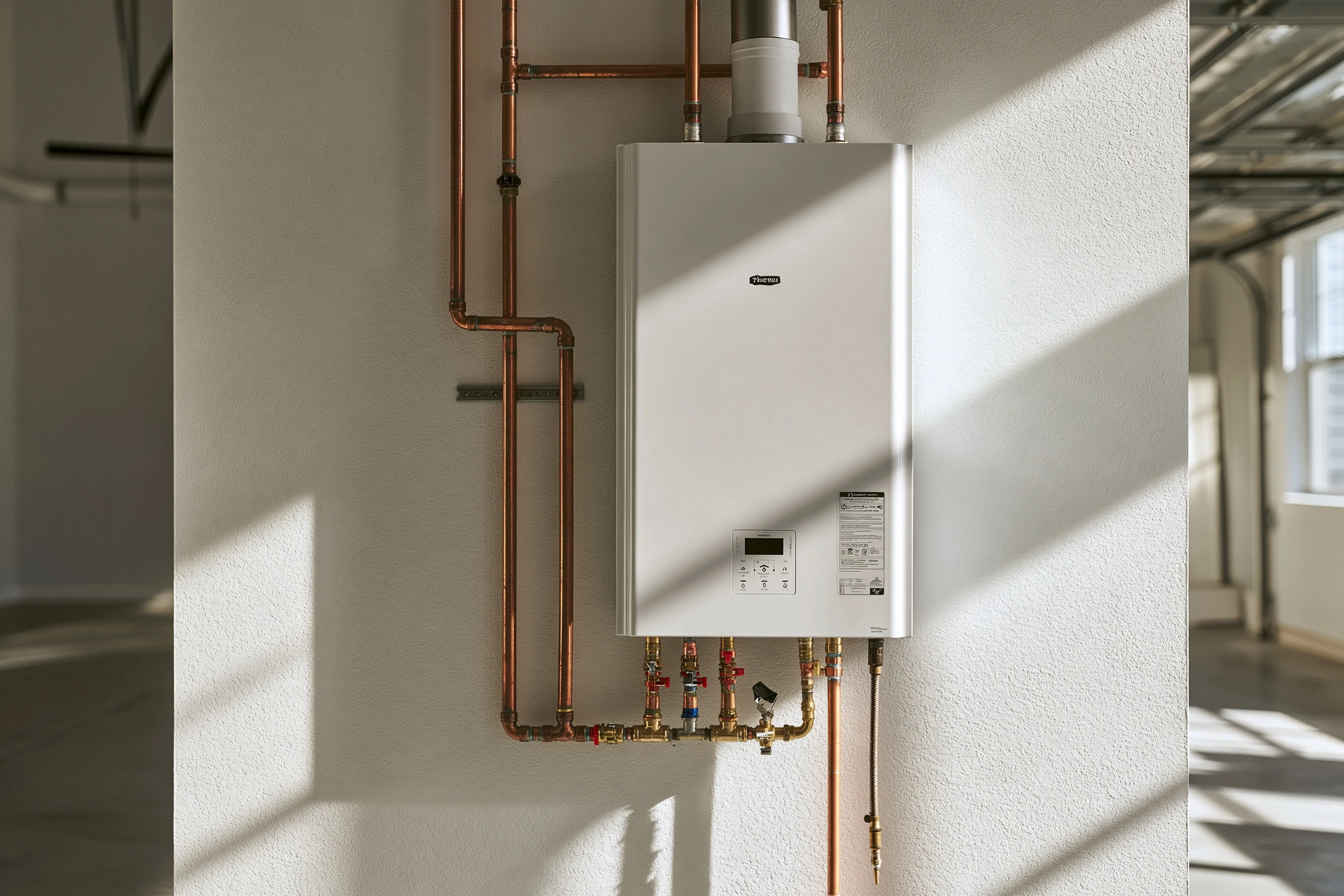
Instead of holding a tank of hot water, a tankless heater warms water only while a tap is open. Its size depends on gallons per minute and on how cold the supply is, and gas models may call for a bigger gas line and different venting.
Tankless heaters need descaling from time to time, and error codes, ignition faults or lukewarm water can point to a sensor, a flame rod or a clogged inlet screen.
In Texas, a city of more than 5,000 people regulates water heaters by ordinance and requires a permit before plumbing work, with a short list of exceptions that leaves out a new heater.
In Garland, Building Inspection lists water heater replacement among the plumbing work that may need a permit. The Responsible Master Plumber on the job obtains the permit and requests the inspection.
Think of a tank in terms of your busiest hour and a tankless unit in terms of everything flowing at the same moment. Garland’s supply water goes into the tankless calculator at 52°F, so the heater has to add 68°F to hit 120°F.
Before you call, put your household into the water heater size calculator, or into the tankless flow calculator if tankless appeals, and keep the result in front of you.
Somewhere on the heater’s label is a serial number, and inside it the maker has encoded the date it was built. Brands use different codes, so the serial number decoder asks for the brand first, then gives you the year and the age against a typical service life.
A heater that has leaked into a wall or under the slab may also need leak detection, and older supply pipes are covered under repiping. Other services are listed on the home page.
Call us to discuss your current issue and how we can assist you. The call is free and you get a free, personalized estimate with no obligation. We're here to help.
Call (855) 321-3426